
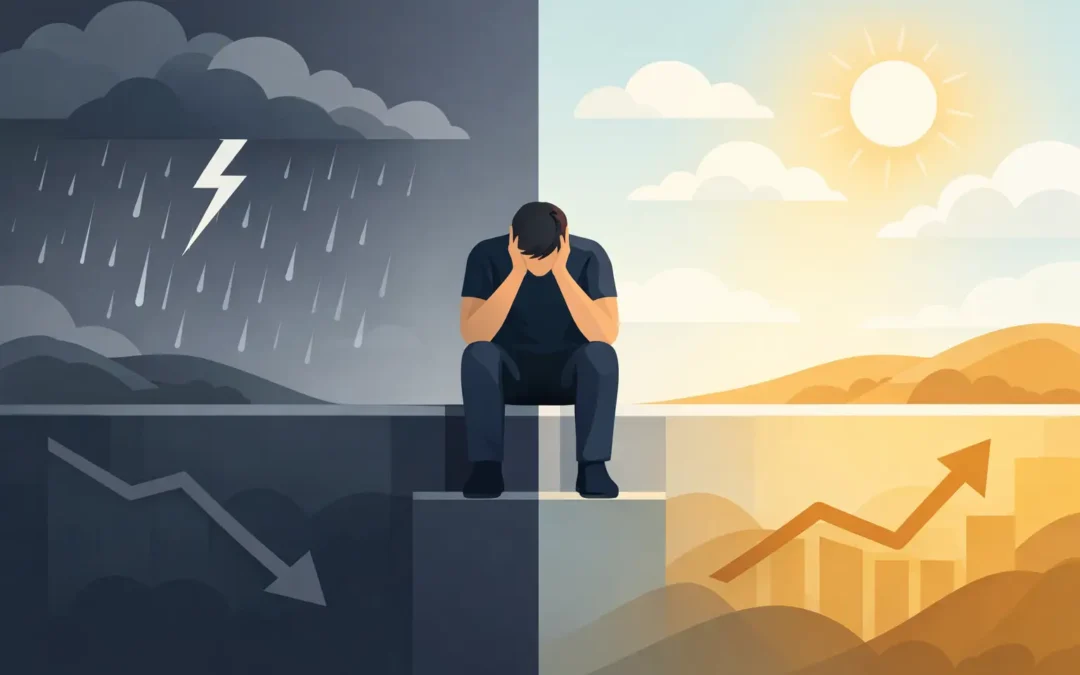
Some seasons announce themselves loudly. You wake up with a knot in your stomach. Small problems feel enormous. You avoid a text, snap at someone you love, or sit in the car for an extra five minutes because walking through the door feels like too much.
When you are having more bad days than good days, it can start to feel like this is simply who you are now. You may tell yourself you should be grateful, tougher, more patient, or better at handling life. But that inner pressure usually adds another layer of exhaustion to a struggle that is already heavy.
A difficult day is part of being human. A difficult pattern deserves your attention.
More Bad Days Than Good Days Is a Signal
You do not need to have everything falling apart to recognize that something needs to change. Sometimes the signal is quieter. You are functioning at work, getting the kids where they need to go, answering messages, and doing what has to be done. Yet underneath it all, you feel tense, disconnected, angry, hopeless, or worn down.
Maybe you keep thinking, “Tomorrow will be better.” Then tomorrow arrives with the same dread, the same argument, the same urge to shut down, or the same feeling that you are failing people who matter to you.
This does not mean you are weak. It may mean you are caught in a cycle that has become familiar, even if it is painful. The cycle could involve anxiety that leads to avoidance, avoidance that creates more pressure, and pressure that makes anxiety worse. It could be conflict with a partner that begins with one small frustration and ends in days of distance. It could be grief, burnout, depression, family stress, parenting challenges, or a habit of putting everyone else first until there is nothing left for you.
When the bad days begin to outnumber the good ones, the question is not, “Why can’t I just get over this?” A more useful question is, “What keeps repeating, and where can this pattern be interrupted?”
Notice What Your Bad Days Have in Common
The details may change from day to day, but recurring distress often has a recognizable rhythm. You may not see it clearly while you are in the middle of it. That is understandable. When your body is on alert and your mind is racing, it is hard to step back and make sense of the bigger picture.
Start gently. Think about the last few difficult days. What happened right before your mood shifted? What did you tell yourself? What did you do next?
For some people, the pattern begins with a thought: “I am going to mess this up,” “They do not care about me,” or “I cannot handle one more thing.” For others, it begins in the body: tight shoulders, a racing heart, fatigue that will not lift, or the feeling that you need to escape. Then comes the response. You withdraw. You overwork. You argue. You scroll for hours. You cancel plans. You say yes when you mean no.
These responses often make sense in the moment. They may have helped you survive difficult experiences before. The problem is that what protects you briefly can also keep the cycle moving. Avoiding a hard conversation may bring temporary relief, for example, but it can allow resentment and misunderstanding to grow.
Seeing this is not about blaming yourself. It is about gaining options. You cannot change every stressor in your life, but you can begin to recognize the moments where you have a choice about what happens next.
The difference between a rough stretch and a deeper struggle
It depends. A hard week after a job loss, illness, move, breakup, or family emergency may reflect a real period of adjustment. You may need rest, practical support, and time to recover. But if the heaviness continues, if you cannot remember the last time you felt like yourself, or if the same painful situations keep coming back, waiting it out may not be enough.
Pay attention when your difficult days affect sleep, appetite, work, school, relationships, parenting, or your ability to enjoy things you once cared about. Pay attention when you are using alcohol, substances, anger, isolation, spending, food, or constant busyness to avoid what you feel. These are not moral failures. They are signs that you may need more support than you have had.
Stop Waiting for a Perfect Breaking Point
Many people postpone therapy because they believe their problem is not serious enough. They compare themselves to someone else, minimize their pain, or promise to reach out once life calms down. But life often does not calm down on its own. The bills still come. The conflict still waits. The same thoughts return when the house gets quiet.
You do not need to be at your absolute worst before asking for help. In fact, therapy can be a place to act before the cycle becomes even more entrenched.
If you have tried to handle this alone, you are not behind. You have likely been doing the best you can with the tools available to you. Therapy is not a judgment on that effort. It is an opportunity to add support, perspective, and practical tools that fit your specific situation.
A counselor can help you slow the merry-go-round down enough to see what is happening. Together, you can identify the triggers, beliefs, relationship dynamics, and coping habits that keep pulling you back into the same place. Then the work becomes concrete: learning how to communicate differently, regulate overwhelming emotions, set boundaries, challenge unhelpful thinking, process pain, or make a decision you have been avoiding.
What Taking One Next Step Can Look Like
The next step does not have to be dramatic. It may be as simple as admitting that this is hard. It may mean telling your partner, “I do not think we are okay, and I want us to get help.” It may mean writing down what happens on your worst days instead of brushing it aside by morning.
You can also create a small pause before your usual reaction. When you feel the urge to cancel, lash out, numb out, or disappear, ask yourself what you need in that moment. Sometimes the answer is water, sleep, a walk, or a conversation. Sometimes it is space. Sometimes it is professional support because the problem has become too complicated or too painful to carry alone.
Small changes matter, but they are not meant to place the entire burden back on you. If your bad days are connected to trauma, depression, anxiety, a difficult relationship, family conflict, or a long-standing emotional pattern, insight and encouragement from someone trained to help can make a meaningful difference.
At Life Counseling Center, therapy is built around your goals and the patterns affecting your life. Whether you are seeking individual counseling, couples therapy, family support, or help for a child or teenager, the focus is not on giving you a generic answer. It is on understanding what has you stuck and finding realistic places to interrupt the cycle.
When immediate help is needed
If your bad days include thoughts of harming yourself or someone else, feeling unable to stay safe, or believing others would be better off without you, do not wait for the feeling to pass alone. Call or text 988 for the Suicide & Crisis Lifeline, call 911, or go to the nearest emergency room. Reaching for immediate help is a strong and necessary step.
You Deserve More Than Enduring
There is a difference between getting through the day and having a life that feels livable. You deserve room to breathe without bracing for the next problem. You deserve relationships that do not leave you constantly walking on eggshells. You deserve to understand your own reactions instead of feeling controlled by them.
The goal is not a life with no bad days. No one can promise that. The goal is a life where bad days do not define your identity, dictate every decision, or keep you trapped in the same painful loop.
You may not be able to change everything today. But you can decide that the pattern deserves attention. That decision can be the first steady step toward days that feel lighter, clearer, and more like your own.
Recent Comments